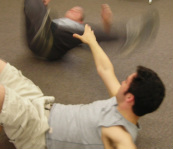
A few weeks ago I wrote at some length about the general utility of studying stage combat. I touched on the subject of falls at the time, but I'd like to go into it in a little more depth here. As I've said before, falls are a surprisingly high risk activity on stage, in part because in many circumstance performers do not even realize that they are at risk. Many are surprised to learn that they constitute an important part of stage combat training. It doesn't take a whole lot of thought to realize why falls are both so important (because you can hurt yourself on the way down to the ground in myriad ways) and so often overlooked (because they are so obvious).
Before going much further I need to acknowledge that there are written sources on falls from fight directors far more advanced than myself. By way of example, an excellent technical manual is Combat Mime: A Non-Violent Approach to Stage Violence by J.D. Martinez, is one of the standard texts on unarmed combat and a book I strongly recommend for anyone pursuing any long-term study of physical performance.
Anyway, let's talk a bit about falling on stage or screen. (Like some of my other posts, this is probably an early draft of something that I'll expand into a more in-depth article or paper later on.)
Before going much further I need to acknowledge that there are written sources on falls from fight directors far more advanced than myself. By way of example, an excellent technical manual is Combat Mime: A Non-Violent Approach to Stage Violence by J.D. Martinez, is one of the standard texts on unarmed combat and a book I strongly recommend for anyone pursuing any long-term study of physical performance.
Anyway, let's talk a bit about falling on stage or screen. (Like some of my other posts, this is probably an early draft of something that I'll expand into a more in-depth article or paper later on.)
 RSS Feed